TECHNOLOGY
Our proprietary non-viral platform enhances therapeutic payloads
and ensure safer therapies by eliminating the risks associated with viral vectors.
TrafEn Technology
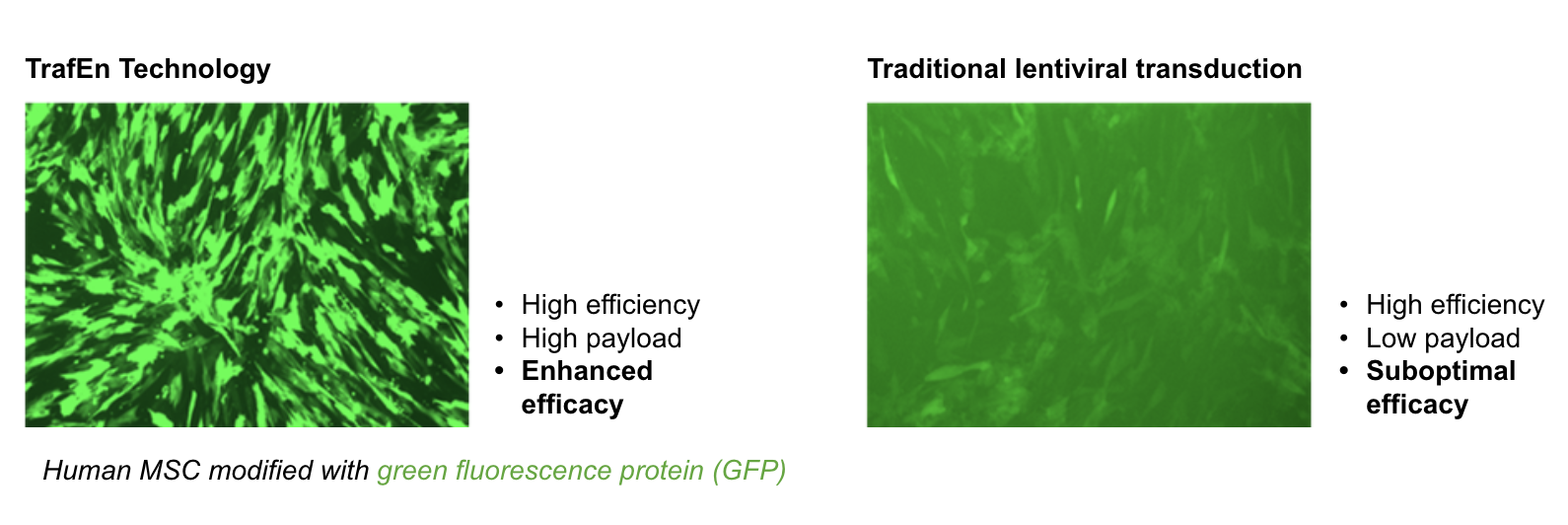
TrafEn (Trafficking Enhancer) is a proprietary, non-viral delivery platform designed to enhance intracellular nucleic acid trafficking by redirecting internalized nucleic acids away from non-productive cellular compartments. This mechanism enables efficient genetic modification while avoiding the safety risks and limitations commonly associated with viral transduction methods.

Better safety
Viral vectors carry the risks of insertional mutagenesis and high immunogenicity.
Our non-viral platform does not use any viral vectors, mitigating these risks.

Better capacity
Viral vector–based systems are inherently limited in the number of genetic copies that can be stably integrated into a host cell.
In contrast, our non-viral platform enables the delivery of larger genetic payloads at high efficiency, without reliance on viral integration mechanisms.

Better efficiency
Viral vector production is time-consuming, expensive, and technically demanding.
Our non-viral platform integrates seamlessly with established cell culture systems, is cost-effective, and shortens gene modification timelines compared to conventional approaches.
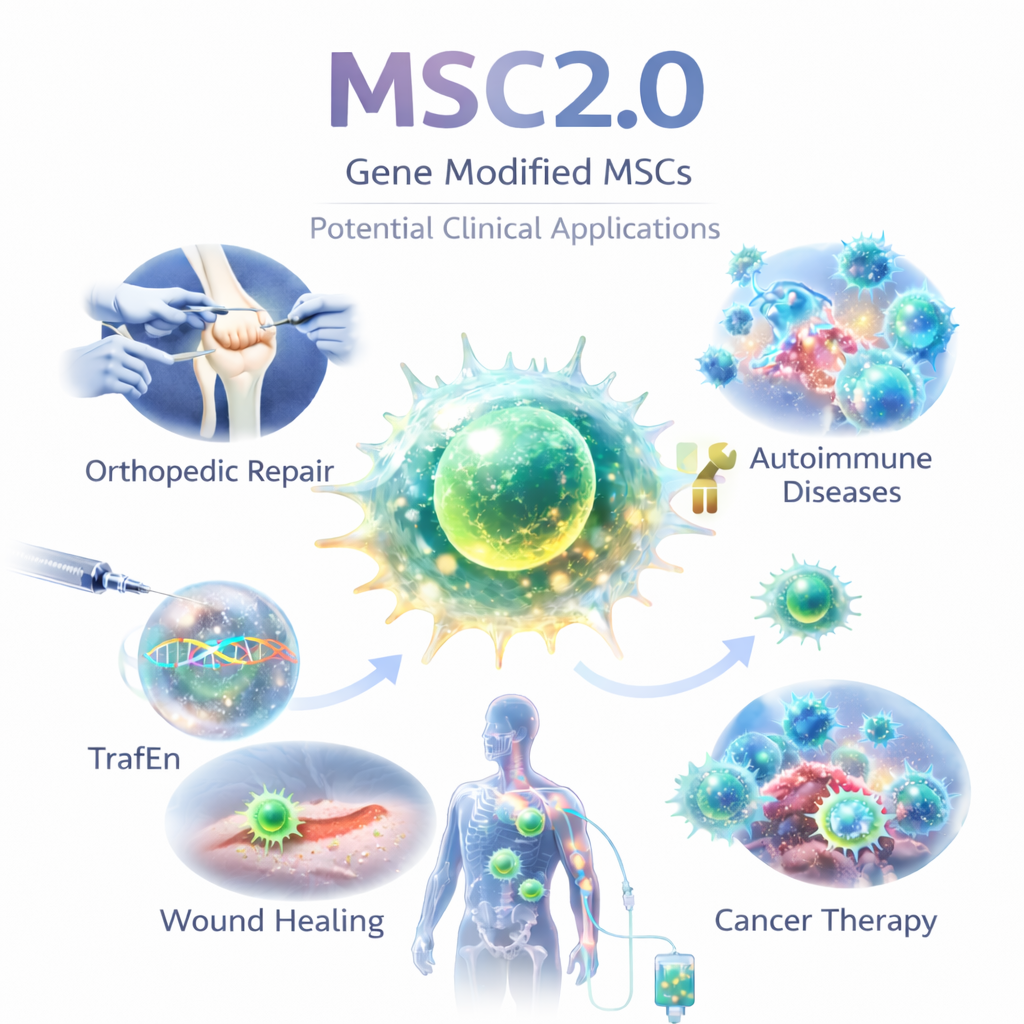
MSC 2.0: Programmable Mesenchymal Stem Cell Therapies Powered by TrafEn
Mesenchymal stem cells (MSCs) are increasingly recognised as versatile therapeutic platforms due to their tumour-tropic behaviour, immunomodulatory properties, and established safety profile. These characteristics make MSCs attractive vehicles for the delivery of therapeutic payloads in oncology. In parallel, MSCs have broad applicability in regenerative medicine, supported by a secretome enriched in growth factors and bioactive molecules.
TrafEn, our proprietary non-viral gene delivery platform, enables precise and efficient engineering of MSCs without reliance on viral vectors. By using TrafEn to program MSCs to express defined therapeutic proteins at controlled and functional levels, we can tailor cell-based therapies to specific disease contexts. This capability underpins our MSC 2.0 approach—transforming native MSCs into programmable, next-generation therapeutic cell products.